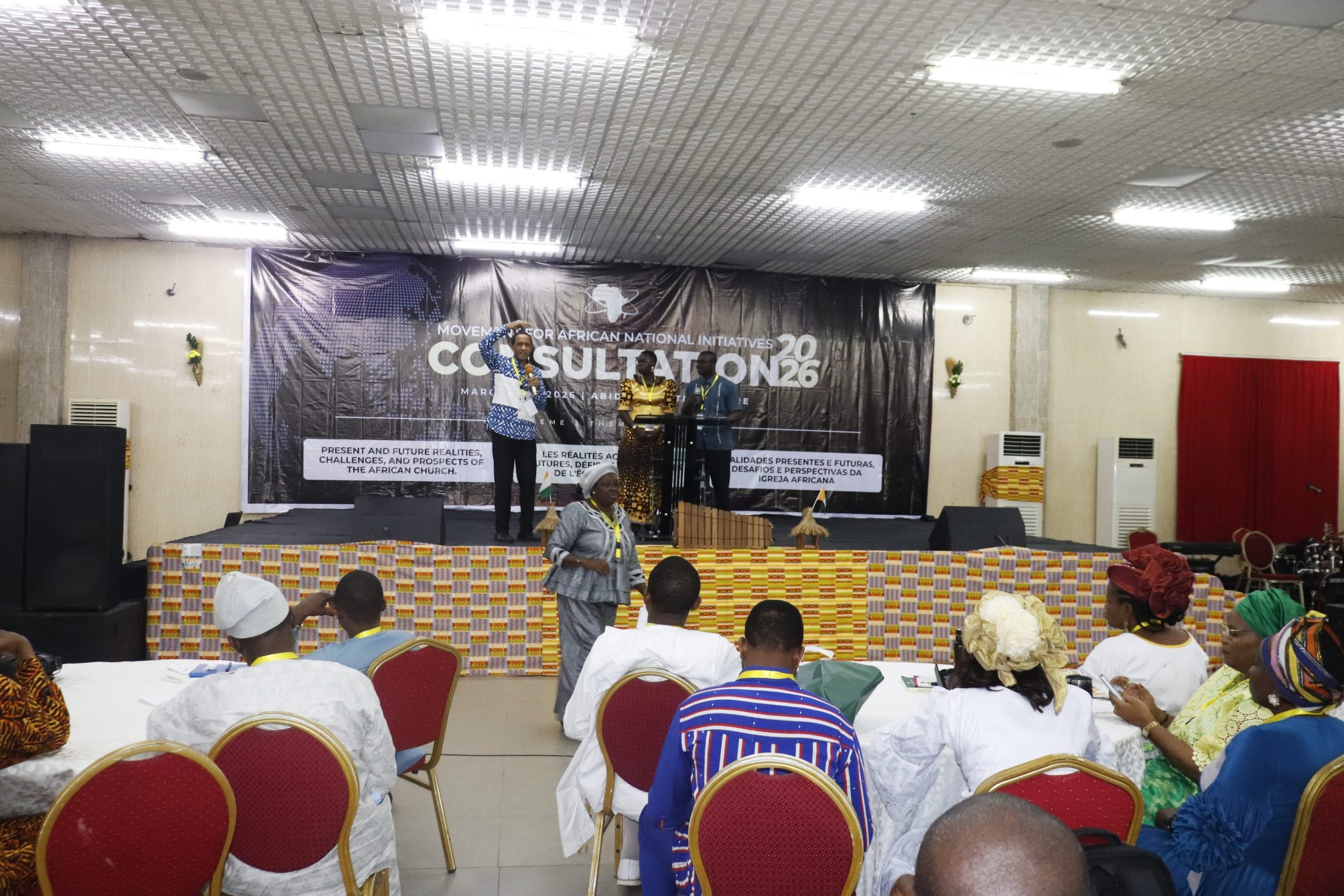
After five days of plenary sessions, panels, round tables, breakout groups and corporate prayer, the participants of the fifth MANI Continental Consultation signed the Abidjan Declaration on 13 March 2026. The consultation, the first ever held in Francophone Africa, took the theme Present and Future Realities, Challenges and Prospects of the African Church.
It marks 25 years since the founding declaration of MANI in Jerusalem. Representatives came from churches, mission agencies and national initiatives across Africa and the African diaspora, joined by partners from the Lausanne Movement, the World Evangelical Alliance, COALA, the European Evangelical Alliance and others.
A kairos moment
Africa is now the continent with the largest Christian population, approximately 750 million believers. The Declaration states that the era of Africa as primarily a mission-receiving continent is over: sending hubs already operate in Lagos, Nairobi, Jos, Ibadan, Owerri, Addis Ababa, Yaoundé, Lomé, Abidjan and Johannesburg, and God calls every church in Africa to be a sender, “not eventually, but now”.
The choice of Abidjan was missional and intentional. The Francophone Sahel, from Senegal and Mauritania through Mali, Burkina Faso, Niger, Nigeria, Sudan, Eritrea, Cameroon and Chad, is one of the most concentrated mission frontiers on earth. The consultation renewed the longstanding MANI call to Go North, and committed to ensure that Francophone and Lusophone voices shape strategy at the highest levels.
Six strategic priorities
The delegates describe these not as recommendations but as a commitment to Kingdom advancement for the decade ahead.
- Renewed MANI vision and strategic leadership. MANI reaffirms that it is a movement, not an organisation. The transition from Rev. Dr. Reuben Ezemadu to Rev. Peter Oyugi signals maturity and continuity.
- Missionary mobilisation and cross-cultural training. Africa must develop its own structures for sending missionaries and fund them from its own resources, including a coordinated Francophone missionary movement in the Sahel.
- Church unity, collaboration and partnerships. Partnership is not generosity but a Kingdom necessity: less duplication, shared research data, and a structural, not just rhetorical, bridge between Anglophone and Francophone Africa.
- Addressing persecution and political instability. With one in five African Christians facing persecution, workers must be prepared theologically and missiologically for suffering, with security-conscious deployment, solidarity, intercession and credible advocacy.
- Transformational discipleship and youth engagement. More than half of Africa’s population is under 25. The consultation calls for discipleship that produces Great Commission disciples and for the genuine inclusion of young people now.
- Contextual challenges and opportunities. The dependency syndrome must be unlearned and replaced by a communal culture of giving, and the poverty mentality and the prosperity gospel are named as twin distortions. The anchor is Revelation 7:9: every people group before the throne.
Moving together: the way forward
- Every nation should strengthen or establish its National Mission Initiative as the indigenous engine for mobilising, training and sending missionaries.
- The Church in Africa should build a communal culture of giving for missions rather than depending on external donors.
- African women should be at the forefront of mission mobilisation and leadership.
- Older leaders should actively open leadership pathways for younger leaders now, passing the baton with intentionality.
- The Francophone church should step fully into its strategic position on the doorstep of the Sahel, supported by the whole African and global mission community.
- Every participating church should identify and adopt an Unreached People Group, give generously, pray persistently and send sacrificially.
- The African Christian Mission Authors (ACMA) initiative should tell the African mission story in African voices.
To the Francophone church: your position on the doorstep of the Sahel is not an accident of geography. It is a divine assignment. Therefore, Go North!
The Declaration closes with a mandate to every delegate: mobilise your church, invest in your younger leaders and adopt your nation’s unreached people group. To the diaspora it says: “you were not scattered; you were deployed”. Its final line gives the consultation its theme: From Abidjan to Everywhere — Until Jesus Comes.
The Listening and Communiqué Sub-Committee was chaired by the Revd Dr. Gideon Para-Mallam, with Dr. Esther Chengo, Rev. Dr. Israel Oluwole Olofinjana, Olaoluwa Adeyemi, Rev. Clement Hlama and Lin Kabachia.